New critical surf studies episodes on The Deep Duck Dive Podcast

Three more episodes of season one of the The Deep Duck Dive Podcast are now available to listen to and we (co-hosts Karen Graaff and Glen Thompson) paddle out into the waves of social and historical matters relating to surfing.

Episode 2 is on the topic of The Waves Don’t Discriminate. In this episode, we discuss the issue of fairness in sport, and how a term that sounds neutral is in fact heavily politicised. We start with the definition of fairness in sport generally and then turn to fairness in surfing. The episode addresses the bans on trans women in sport, including surfing, and look to the gender politics behind those bans as well as the attempts by sporting bodies to use policies to regulate transgender involvement in sport. Listen to episode two of the podcast here.

Episodes 3 and 4 is a two-part survey the history of surfing in Africa. In Episode 3: History of Surfing in Africa Part 1: The Colonial Archive we focus primarily on the history of surfing in West Africa, which has colonial records of African aquatic activities. This history draws on the historical work of Kevin Dawson which explores, and reclaims, West African aquatic practices and we also speculate on what other historical sources scholars could look to when opening up the archives to find evidence for surfing in the past elsewhere along the extensive African coastline. We focus the period from the early modern period (c. 1500) to the beginning of the twentieth-century (c. early 1900s). Listen to episode of the podcast here.

In Episode 4: History of Surfing in Africa Part 2: The Modern Era we focus on surfing in Africa during the modern era, from c. early 1900s to the present. We cover the topics of surfing and the British Empire and indigenous African surfing practices in West Africa before 1945, the era of “surf discovery” in Africa in the Sixties and Seventies, and then the diffusion of surfing through the processes of surf tourism, non-profit led social development, and sportisation in Africa from the 1990s and 2000s – taking the story up to surfing’s entry into the Olympics in the 2020s. Listen to episode of the podcast here.

Listen to all The Deep Duck Dive Podcast episodes here.

Launch of The Deep Duck Dive Podcast

Announcement: Co-hosts Glen Thompson (Research Fellow, History Department, University of Stellenbosch) and Karen Graaff (Research Fellow, Women’s and Gender Studies, University of the Western Cape), academics and surfers based in Cape Town, South Africa, have launched The Deep Duck Dive Podcast – a public pedagogy and public scholarship podcast engaging with the oceanic turn in the global South by focusing on issues that matter within surfing as a lifestyle sport.

While the podcast has been a work in progress for some time, see our journal article in Critical Studies in Teaching and Learning published open access here in 2023 for our documentation of our approach to scholarly podcasting and thinking with/in surfing, we launched the podcast on 30 September 2024. We aim to publish new episodes every two weeks.

Season 1 of the podcast opens with a pilot episode introducing the podcast and ourselves. Episode 1 is titled: Surfing history – Why History Matters. The theme for the first season is, What could surfing (be)come, and makes use of hydrocolonialism, hydrofeminism and critical surf studies perspectives to explore the following topics: surfing’s colonial history, the history of surfing in Africa, surfing and social change, discrimination and the waves, inclusive surfing spaces, and surfer environmental consciousness. In these episodes we seek to challenge and subvert surfing’s normalisation of certain raced, gendered, classed, and ableised bodies; both in past and in the present and so re-imagine surfing’s future through a social justice lens as decolonised and inclusive sporting and leisure activity. A Season 2 of the podcast is planned for 2025.

Listen to The Deep Duck Dive Podcast here.

Interview: Unridden – Surfing and politics during COVID times in South Africa

Recently, Kim Feldmann of Surf Simply interviewed with me about some of the main points of my research on surfing ans politics in South Africa during the early months of the COVID pandemic.

This is from the introduction of the interview, titled “Unridden”:

‘”In the midst of the COVID-19 pandemic and the hard lockdown in South Africa in the first half of 2020, I took an interest in how surfing communities along the coast from Cape Town to Durban were responding to the “new normal” of the beach ban,” says Dr Glen Thompson, a Research Fellow in the History Department at Stellenbosch University, South Africa, author of a chapter entitled Dreaming of “Level Free”: Lockdown and the Cultural Politics of Surfing during the COVID-19 Pandemic in South Africa in the book Sport and Physical Culture in Global Pandemic Times: COVID Assemblages, edited by David Andrews, Holly Thorpe, Joshua Newman. In it, Thompson delves into the influence of surfing’s non-conformist values and notions of freedom on the collective mindset of South African surfers amidst the pandemic, and how the May 5 beach protest against ocean-based activities shaped perceptions of surfer entitlement entwined with the history of whiteness and middle-class privilege in South African surfing.’

Read the full Surf Simply interview here.

Surfing, the beach and lockdown during the COVID-19 pandemic in South Africa

I recently had a chapter published on surfing during COVID times in South Africa. The chapter is titled: ‘Dreaming of “Level Free”: Lockdown and the Cultural Politics of Surfing during the COVID-19 Pandemic in South Africa‘ and is part of the volume Sport and Physical Culture in Global Pandemic Times: COVID Assemblages (Palgrave Macmillan, 2023) edited by David Andrews, Holly Thorpe and Joshua Newman. This collection draws on scholarly research from across the globe and “highlights the global and local inadequacies of the sporting/physical cultural order exposed by COVID-19.”

The abstract for my chapter (set out below) draws attention to my interest in tracing the cultural, social and political factors that shaped surfer attitudes to beach bans during the lockdown in the early months of the COVID-19 pandemic in South Africa:

The South African government implemented a hard lockdown in response to the COVID-19 pandemic. One lockdown measure was a national beach ban which received national attention due to anti-lockdown protests at three beaches on May 5, 2020. In contextualising these beach protests within the period of March to August 2020, this chapter critically examines how surfing’s historical non-conformist values and ideas of freedom shaped surfer social attitudes in COVID times. Protesting surfers’ desire to return to the waves is read as the making of a politics of refusal. This refusal to acquiesce to the state’s regulations was the most visible response of surfers to the lockdown and shaped national tropes about surfer entitlement entangled with South African surfing’s history of whiteness and middle-class privilege. Refusalist responses, however, were contested within the South African surfing community as alternative configurations of the relationship between surfing and the lockdown were also expressed.

While my chapter is limited to the early to mid-2020 period, my original thoughts were to consider and compare those periods when a beach ban was in place due to lockdown rules for the 2020 and 2021 periods. I still hope to undertake that research, using this chapter here as a starting point. Another theme I was keen to explore further is the poetics of surfer responses to the beach bans as seen in artistic, cartoon and literary representations of the experience of surfing during lockdown.

History lesson: the history of surfing in SA

On 4 February 2020, Phemelo Motene, host of SAfm‘s show “Life Happens”, interviewed me on the writing the history of surfing in South Africa and some of the key social history themes I focus on.

We chatted about surfing’s past in South Africa since WW2 as well as the changing representations of surfing in South Africa today, including a focus on the role of black surfers and female surfers in shaping today’s wavescape. We discussed how surfing development programmes add value to the lives of black surfers, the emerging commercialisation of township surf culture, and surfing’s involvement in the 2020 Tokyo Olympics. We also covered about my research method of participating in surf contests.

You can listen to the full interview here (listening time: 17min 48sec).

This interview was conducted a month before COVID-19 arrived on South Africa’s shores so there is no reference to the impact on COVID-19 on the South African surfing community – a topic I will post on in due course.

Book launch: Interview with Melissa Volker on her novel Shadow Flicker

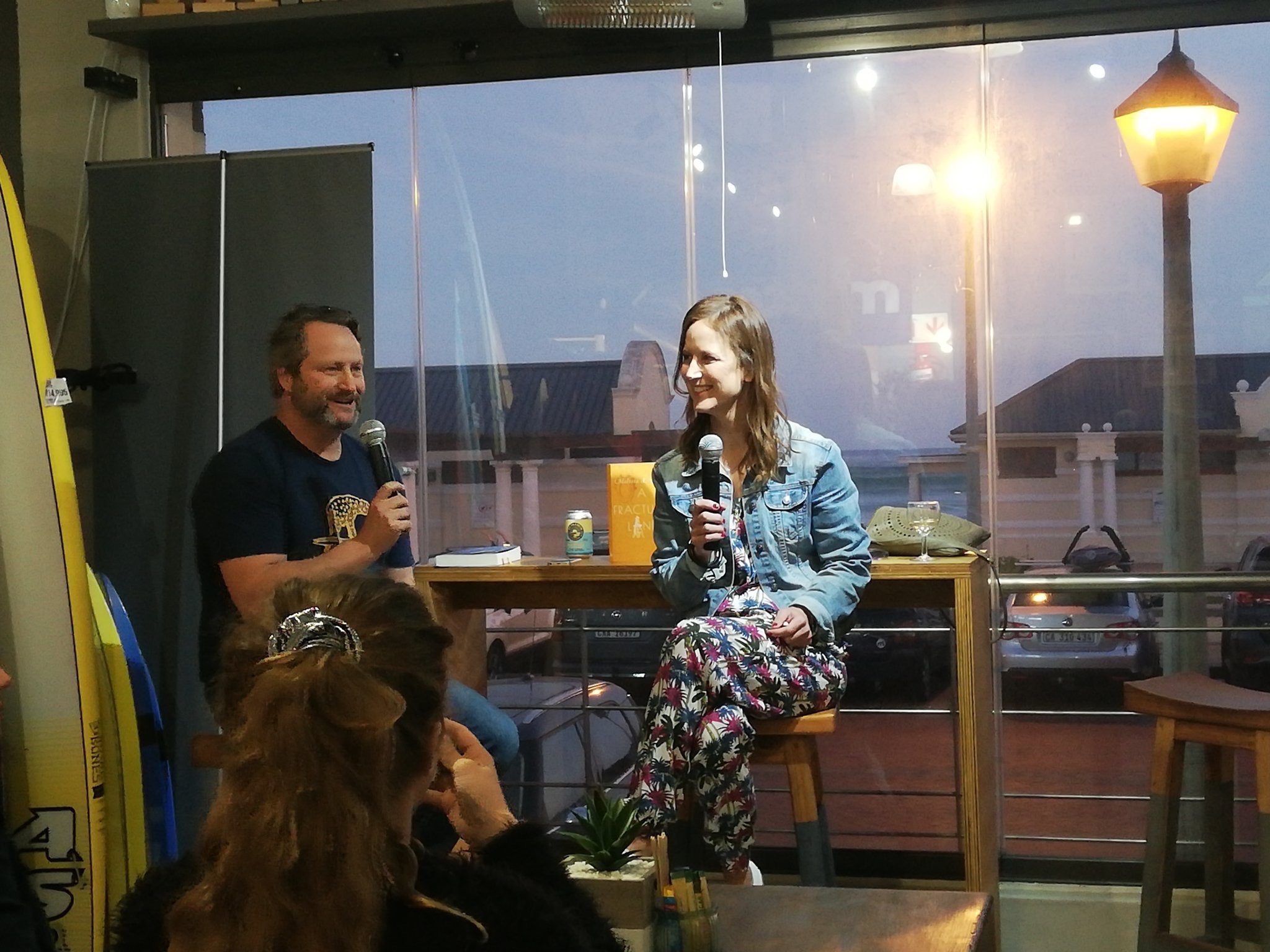
On 22 August 2019 I interviewed Melissa Volker about her eco-romance Shadow Flicker (Karavan Press, 2019) at Xpression on the Beach, Muizenberg. The novel is set in contemporary Cape St Francis, where the female protagonist returns to surfing. The novel addresses environmental issues relating to the development wind energy farms in the area.

This is one of few literary outputs in South Africa to foreground surfing within the novel’s plot and frame main characters as surfers (or where the authors are surfers themselves). I am aware of a handful of novels and short-stories in English which also do so, namely: Hagen Engler’s Life’s A Beach (1997) and Water Features (1998) (autobiographical fiction, short stories) and Robin Auld’s Tightlines (2000) (beat fiction), Byron Loker’s New Swell (2006) (autobiographical fiction, short stories), Mike Nicol’s Of Cops and Robbers (2013) (crime fiction), and Mary Duncan’s Surfing Sally (2010) (illustrated children’s fiction). Andy Mason’s (aka N.D. Mazin) The Legend of Blue Mamba (2013) (graphic novel) brings this literature into conversation with the world of underground comix.

I am aware of Afrikaans youth fiction too, specifically Mary-Ann van Rensburg’s ‘n Reënboog oor Grootbaai (1995) and Jeanette Morton’s Die Vlinder en die Surfer (2012).

There are also fictional short stories published in local surf magazines since the 1960s.

There is published poetry too that adds to the literature featuring surfing, for example, Robin Auld’s “Between the Storms” and “Reef” in his Kelp (2006) and Stephen Symons’ “Death of a Surfer” and “Muizenberg” in his Questions for the Sea (2016).

It may be time to start compiling an authoritative account of South African “surflit”. Inspiration for this can be drawn from the innovative work undertaken for the Waves of Fiction: Surfing in Australian Literature project led by scholar Rebecca Olive. The aim of the project is to be “able to follow the various threads of surfing that weave through Australian literature [that] will deepen our understanding of how surfing has shaped our relationships to beaches, coastlines and oceans, and how surfing has contributed to a sense of being Australian.”

Gender, Sex and Competitive Surfing in South Africa – comparing the late 1970s and early 1990s

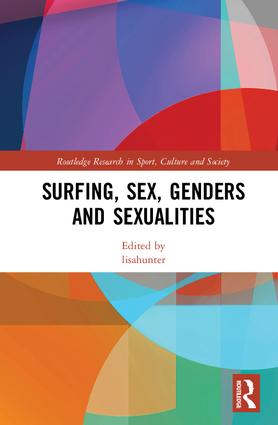
I have a chapter published in a study that focuses on how sex/es, gender/s and sexuality/ies have shaped and re-shape surfing culture. The book, edited by lisahunter, is Surfing, Sex, Genders and Sexualities, (London and New York: Routledge, 2018), covers surfing’s pasts and its present. My historical lisahunte coverchapter is titled: “A tale of two surf contests: Gender, sex and competitive surfing in South Africa during the late 1970s and early 1990s.”

In summary, the chapter historicises two surf contests as formative moments in South African amateur surfing during apartheid and as South Africa began its transition to a democracy. The 1978 South African Surfing Championships illustrated the consolidation of surfing’s patriocolonial whiteness at a time when local amateur surfing was under pressure from the international boycott of apartheid sport and the ascendancy of professional surfing. The 1992 Wella for Women’s Surfing Contest was the first women’s only surf event in the country and foregrounded the representation and the ongoing struggle for recognition of female white surfers within a male dominated sporting arena as South Africa transitioned towards democracy and global surf brands began commercialising women’s surfing. These surf contests open up how political and socio-cultural events shaped surfing, how patriarchy was produced within local organised surfing, and how the intersectionality of gender, sex, and race is crucial in tracing the changing social construction of competitive surfing identities in South Africa.

As set out in the overview of book, Surfing, Sex, Genders and Sexualities “crosses new theoretical, empirical and methodological boundaries by exploring themes and issues such as indigenous histories, exploitation, the marginalized, race, ethnicity, disability, counter cultures, transgressions and queering. Offering original insights into surfing’s symbolism, postcolonialism, patriocolonial whiteness and heteronormativity, its chapters are connected by a collective aspiration to document sex/es, gender/s and sexuality/ies as they are shaped by surfing and, importantly, as they re-shape the many, possibly previously unknown, worlds of surfing”

lisahunter’s introduction to the book outlines this field of study and points to future directions in scholar-activist engagements in and with surf culture. The introduction is available here – click on “preview PDF”.


Race, Gender, Politics and Transnationalism in the Making of Surfing’s Sixties in South Africa

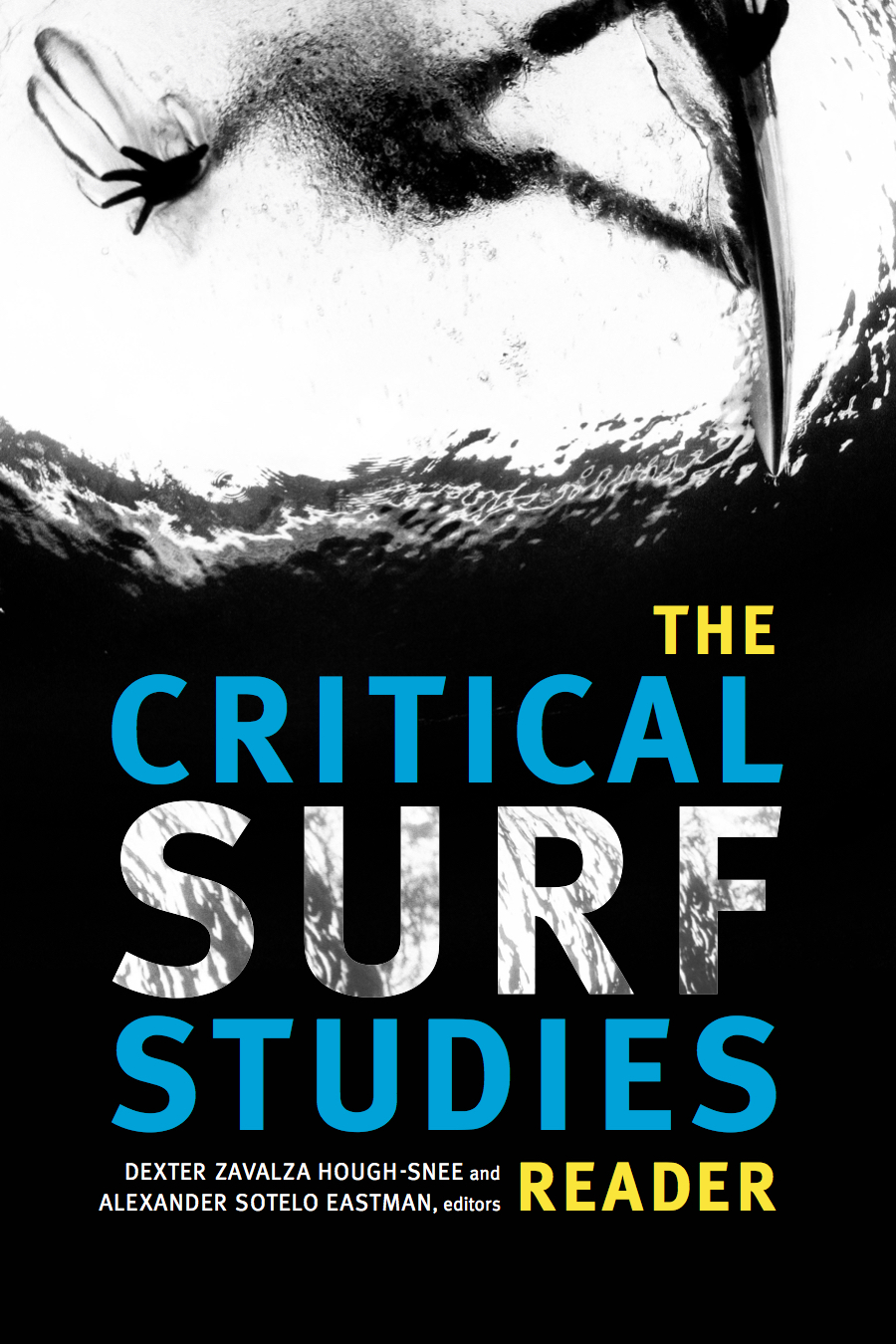
In a chapter titled “Pushing under the Whitewash: Revisiting the Making of South Africa’s Surfing Sixties” in Dexter Zavalza Hough-Snee and Alexander Sotelo Eastman (eds), The Critical Surf Studies Reader, (Durham: Duke University  Press, 2017), I explores the making of the South African surfing lifestyle in Sixties.
CSSR_cover_front copia
The chapter historicizes how surfing in South Africa was raced, gendered and shaped by transnational surf culture. The socio-cultural determinations of racial exclusion and male privilege are examined through the intersectionality of a tanned whiteness fashioned through beach apartheid, lifestyle consumption and an imported “California dreaming.” In revisiting South African surfing’s emergence in the years from 1959 to 1968, this chapter seeks to push under the whitewash of that period and point to the persistence in the present of South African surfing’s founding mythologies.
From book’s blurb – “The Critical Surf Studies Reader brings together eighteen interdisciplinary essays that explore surfing’s history and development as a practice embedded in complex and sometimes oppositional social, political, economic, and cultural relations. Refocusing the history and culture of surfing, this volume pays particular attention to reclaiming the roles that women, indigenous peoples, and people of color have played in surfing.”
The introduction to the volume by Hough-Snee and Eastman, which provides a historiographic overview of surfing studies, can be downloaded here.

Review Essay: Surfing and Swimming Histories in the Radical History Review

My review essay “Disturbed Waters: New Currents in the History of Water Sport,” Radical History Review 125, (May 2016) appeared in a special issue of the journal edited by Peter Alegi and Brenda Elsey, focusing on the theme of “Historicizing the Politics and Pleasure of Sport”.

I review studies on swimming and surfing history which open up new perspectives on the relationship between politics, culture, and gender. The books under review are:RHR_125_cover.png

  • Lisa Bier, Fighting the Current: The Rise of American Women’s Swimming, 1870 – 1926, (Jefferson, NC: McFarland, 2011).
  • Scott Laderman, Empire in Waves: A Political History of Surfing, (Berkeley: University of California Press, 2014).
  • Isaiah Helekunihi Walker, Waves of Resistance: Surfing and History in Twentieth-Century Hawai‘i, (Honolulu: University of Hawai‘i Press, 2011).

These water sports can be seen historically as political and determined by local, national, and global conditions. Each study historicizes the politics of aquatic pleasure. Bier’s Fighting the Current foregrounds American women’s swimming challenge to the social order. Walker’s Waves of Resistance looks to the contested nature of the surf zone in reclaiming Hawaiian surfing “traditions” and masculinities marginalized by Western cultural appropriation. Laderman’s Empire in Waves documents the Americanization of surfing, how it expanded globally as a politically ambiguous cultural practice, and carried with it the seeds of US imperialism.

Alegi and Elsey’s introduction to this sports history issue of the journal can be downloaded from here.


Talking about books and the big-wave brotherhood

“Me and My Board” was a discussion session hosted by the 2016 Open Book Festival in Cape Town on Saturday, 10 September 2016. The panel included: Capetonian big-wave surfer and SUP adventurer Chris Bertis, with his autobiographical account of his 2010 Mavericks Big Wave Invitational win in  Stoked! (Zebra Press, 2015), and Andy Martin, University of Cambridge French literature and philosophy academic and surfer with his Stealing the Wave (Bloomsbury, 2008), subtitled “the epic struggle between Ken Bradshaw and Mark Foo”, about their big wave surfing rivalry in the 1980s and 1990s. I was asked to chair the session.

The session was captured by surfer, SUP’er and writer Melissa Volker for Wavescape.co.za as “Talk About Waves“, noting who else came to listen: “It was as much a weird blend of academia and aloha on stage as it was in the audience. There was a mix of readers who surf (or surfers who read?) and literati, those bookworms and mind surfers who never have (and never will) get on a surfboard.” Read the full article, with photographs and the podcast of the session (it runs for about 1 hour).

Among her reflections, Melissa captured the contradiction of speaking about a big-wave brotherhood that emerged during the conversation – it “does not refer to gender, but rather to the connection with people in the ocean” (Bertish) and “strikes a patriarchal note” (Martin). These views are poles apart, the former an example of a hegemonic surfing masculinity at work and the latter a pro-feminist reading of surfing’s male domination. This raised the question of naming women surfers as girls from the a member of the audience, and my reply that in surfing culture the representation of the “surfer girl” has a history of subordinating women surfers to the male surfing imaginary. However, while that cultural history is acknowledged, some recent third-wave feminist sports scholars have seen girl surfers as advocates of stealth feminism empowering women as athletes within the sport of surfing. It was here that the “Me and My Board” session connected with the broader currents within contemporary surfing culture and its changing gender order – pointing to the continued need to interrogate why we create myths out of big wave surfing and how those myths reinforce the masculine within surfing and society.