New critical surf studies episodes on The Deep Duck Dive Podcast

Three more episodes of season one of the The Deep Duck Dive Podcast are now available to listen to and we (co-hosts Karen Graaff and Glen Thompson) paddle out into the waves of social and historical matters relating to surfing.

Episode 2 is on the topic of The Waves Don’t Discriminate. In this episode, we discuss the issue of fairness in sport, and how a term that sounds neutral is in fact heavily politicised. We start with the definition of fairness in sport generally and then turn to fairness in surfing. The episode addresses the bans on trans women in sport, including surfing, and look to the gender politics behind those bans as well as the attempts by sporting bodies to use policies to regulate transgender involvement in sport. Listen to episode two of the podcast here.

Episodes 3 and 4 is a two-part survey the history of surfing in Africa. In Episode 3: History of Surfing in Africa Part 1: The Colonial Archive we focus primarily on the history of surfing in West Africa, which has colonial records of African aquatic activities. This history draws on the historical work of Kevin Dawson which explores, and reclaims, West African aquatic practices and we also speculate on what other historical sources scholars could look to when opening up the archives to find evidence for surfing in the past elsewhere along the extensive African coastline. We focus the period from the early modern period (c. 1500) to the beginning of the twentieth-century (c. early 1900s). Listen to episode of the podcast here.

In Episode 4: History of Surfing in Africa Part 2: The Modern Era we focus on surfing in Africa during the modern era, from c. early 1900s to the present. We cover the topics of surfing and the British Empire and indigenous African surfing practices in West Africa before 1945, the era of “surf discovery” in Africa in the Sixties and Seventies, and then the diffusion of surfing through the processes of surf tourism, non-profit led social development, and sportisation in Africa from the 1990s and 2000s – taking the story up to surfing’s entry into the Olympics in the 2020s. Listen to episode of the podcast here.

Listen to all The Deep Duck Dive Podcast episodes here.
Surfing, the beach and lockdown during the COVID-19 pandemic in South Africa

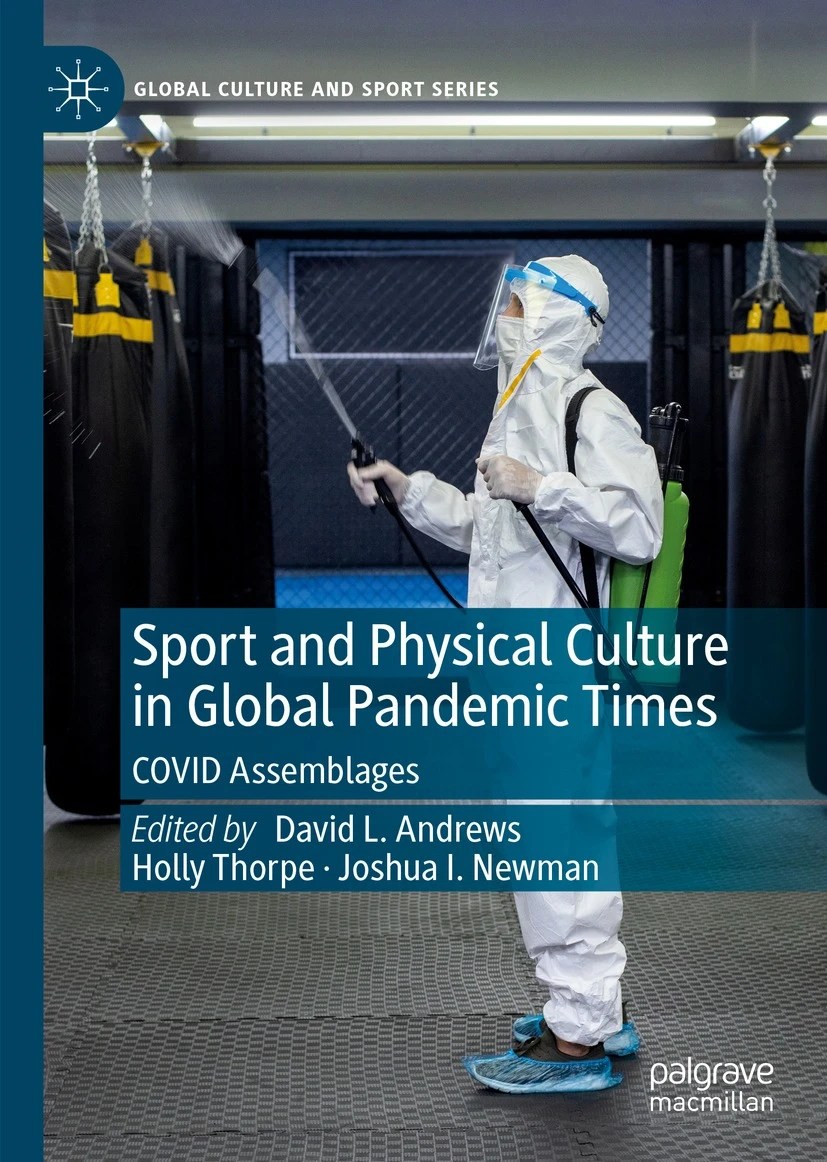
I recently had a chapter published on surfing during COVID times in South Africa. The chapter is titled: ‘Dreaming of “Level Free”: Lockdown and the Cultural Politics of Surfing during the COVID-19 Pandemic in South Africa‘ and is part of the volume Sport and Physical Culture in Global Pandemic Times: COVID Assemblages (Palgrave Macmillan, 2023) edited by David Andrews, Holly Thorpe and Joshua Newman. This collection draws on scholarly research from across the globe and “highlights the global and local inadequacies of the sporting/physical cultural order exposed by COVID-19.”

The abstract for my chapter (set out below) draws attention to my interest in tracing the cultural, social and political factors that shaped surfer attitudes to beach bans during the lockdown in the early months of the COVID-19 pandemic in South Africa:

The South African government implemented a hard lockdown in response to the COVID-19 pandemic. One lockdown measure was a national beach ban which received national attention due to anti-lockdown protests at three beaches on May 5, 2020. In contextualising these beach protests within the period of March to August 2020, this chapter critically examines how surfing’s historical non-conformist values and ideas of freedom shaped surfer social attitudes in COVID times. Protesting surfers’ desire to return to the waves is read as the making of a politics of refusal. This refusal to acquiesce to the state’s regulations was the most visible response of surfers to the lockdown and shaped national tropes about surfer entitlement entangled with South African surfing’s history of whiteness and middle-class privilege. Refusalist responses, however, were contested within the South African surfing community as alternative configurations of the relationship between surfing and the lockdown were also expressed.

While my chapter is limited to the early to mid-2020 period, my original thoughts were to consider and compare those periods when a beach ban was in place due to lockdown rules for the 2020 and 2021 periods. I still hope to undertake that research, using this chapter here as a starting point. Another theme I was keen to explore further is the poetics of surfer responses to the beach bans as seen in artistic, cartoon and literary representations of the experience of surfing during lockdown.

Race, Gender, Politics and Transnationalism in the Making of Surfing’s Sixties in South Africa

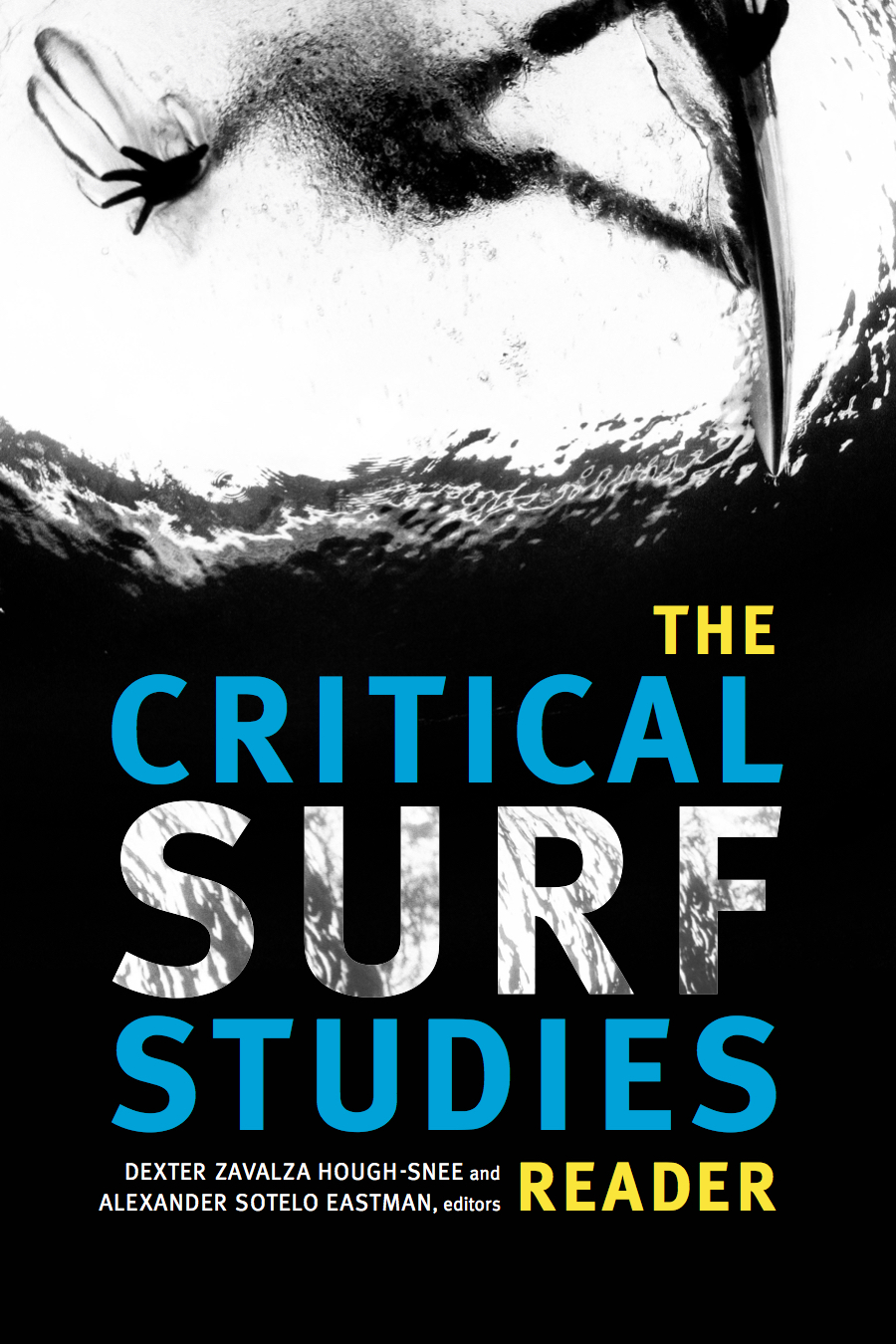
In a chapter titled “Pushing under the Whitewash: Revisiting the Making of South Africa’s Surfing Sixties” in Dexter Zavalza Hough-Snee and Alexander Sotelo Eastman (eds), The Critical Surf Studies Reader, (Durham: Duke University  Press, 2017), I explores the making of the South African surfing lifestyle in Sixties.
CSSR_cover_front copia
The chapter historicizes how surfing in South Africa was raced, gendered and shaped by transnational surf culture. The socio-cultural determinations of racial exclusion and male privilege are examined through the intersectionality of a tanned whiteness fashioned through beach apartheid, lifestyle consumption and an imported “California dreaming.” In revisiting South African surfing’s emergence in the years from 1959 to 1968, this chapter seeks to push under the whitewash of that period and point to the persistence in the present of South African surfing’s founding mythologies.
From book’s blurb – “The Critical Surf Studies Reader brings together eighteen interdisciplinary essays that explore surfing’s history and development as a practice embedded in complex and sometimes oppositional social, political, economic, and cultural relations. Refocusing the history and culture of surfing, this volume pays particular attention to reclaiming the roles that women, indigenous peoples, and people of color have played in surfing.”
The introduction to the volume by Hough-Snee and Eastman, which provides a historiographic overview of surfing studies, can be downloaded here.

Otelo Burning, freedom and surfing

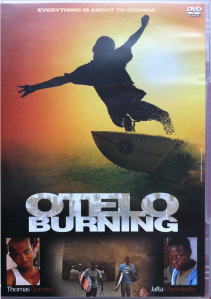
In August 2013, cjac20.v026.i03.coverMeg Samuelson and I collaborated on an interdisciplinary project that considered the contemporary politics, shifting poetics and invoked pasts in the film Otelo Burning (2011), an isiZulu language film that uses surfing to pose questions about personal and political freedom during the demise of apartheid (1988-1990).

An outcome of the project was the publication of several essays and an interview with Sara Blecher (producer, director) and Sihle Xaba (actor, surfer) in the Contemporary Conversations section of the Journal of African Cultural Studies, Volume 26, Number 3, September 2014.

Contemporary Conversations: Otelo Burning 

Meg Samuelson and Glen Thompson, “Introduction.” (Free Access to the article, which includes audio-visual supplementary material relating to the film and its reception).

Meg Samuelson, “Re-telling freedom in Otelo Burning: the beach, surf noir, and Bildung at the Lamontville pool.” (Free Access to the article).

Glen Thompson, “Otelo Burning and Zulu surfing histories.” (Open Access to the article).

Bhekizizwe Peterson, “Otelo Burning (dir. Sara Blecher, 2011).

Litheko Modisane, “Otelo Burning: On the turbulence of freedom.”

David Johnson, “Beyond tragedy: Otelo Burning and the limits of post-apartheid nationalism.”

Meg Samuelson and Glen Thompson, “Interview with Sara Blecher and Sihle Xaba: the making and meanings of Otelo Burning.”

OB dvd-cover

A Cultural History of Zulu Surfers in South Africa

I presented a research in progress paper entitled “Transforming Surfer Boys: A Cultural History of Zulu Surfers in South Africa, 1965 to 2013” in the panel on Conflict and Leisure at the Historical Association of South Africa (HASA) Biennial Conference in Durban on Friday, 27 June 2014. This working paper on black surfing histories in South African forms part of my doctoral study on gender and politics in the history of South African surfing culture.

Surf film: Zulu Surf Riders (2008)

Summary of the paper

A cultural history of black surfing disrupts the whiteness, but not the masculine ethos, of surfing in South Africa. For Durban, two films have foregrounded Zulu surfers, the feature film Otelo Burning (2011) and documentary film Kushaya Igagasi (2013), translated as “Hitting the Waves”. In seeking to contextualise these contemporary formations of youthful black, male surfing subjectivities, this paper sets out a genealogy of Zulu surfers in surfing magazines, surf industry advertising and films featuring surfing (surf films, documentaries and feature films) from 1965 to the present. These sources provide an archive for a postcolonial reading of established (mediated, commercialised and organised) surfing culture’s appropriation of Zuluness during years of beach apartheid to affirm white surfing’s cultural distinction and difference in terms of race, class and gender. In the post-apartheid era, a discourse of surfing development and national sports transformation re-shaped views of Zulu surfers from that of athletic tokenism to social inclusion in the waves. Nevertheless, race trouble (the presistance of racial inequality in the everyday despite a discourse of tolerance) and contested masculinities at the beach have remained a persistence of the past. From the early 1990s, the voices of Zulu surfers in KwaZulu Natal can also be found in the surfing archive. A changing cultural politics has made possible an agency for Zulu surfers to accommodate, subvert or re-appropriate established surfing’s representations of “the surfer”. While this self-fashioning may be driven by a desire for social mobility, they have emerged, especially in the 2000s, out of clubs or social development programmes, inclusion within surf teams, brand sponsorship and media attention. The Africanisation of South African surfing culture, expressed at times as township surfing culture, is addressed by exploring the local and global processes of surfing lifestyle consumption among Zulu surfers in Mzansi (the South).

Transforming Surfer Boys in the New South Africa

I presenting a paper on how black surfers have been represented in South Africa’s surfing print magazines since 1990 at the Work/Force: South African Masculinities in the Media Conference  held at Stellenbosch University on 13th & 14th September 2012.

Summary of the paper
The idea of the “surfer boy” in the South African surfing imaginary is no longer primarily white, male and youthful although Zigzag (since 1976) and thebombsurf (since 2008) surf magazines continue to maintain that white, heterosexual hegemony within their textual and visual representations supported by surf industry advertising expenditure. Nor is surfing nostalgically looking back to the halcyon days of the Californian inspired Sixties and Seventies. Rather, through grassroots initiatives, surfing development programmes linked to organised surfing, and pressure from the national sport ministry, that same surf media and several surf movies are constructing the idea of surfing in Mzansi (the South) at established and emergent surfing centres along the South African coastline, such as at Durban, Mzumbe, Port St Johns Jeffreys Bay and Muizenberg, where black male surfers and white girl surfers are visible. In many ways it is the new possibility of these postcolonial surfing sites that have provided the greatest challenge to the historically white and male South African surfing imaginary and opens up possibilities for new male identities and gender relations on the post-apartheid beach and, through sporting and recreational practices, in the surf. This does not mean that the surf media is not without producing social tensions in what is said and not said (and what is seen and unseen) about race and gender. The former surfaces as race trouble in negotiating new identities that attempt to masked social fractures within surf culture. The latter shows fissures in the production of a white South African surfing masculinity historically used to supporting its dominance in society through a sporting practice. In these ways, the South African surf media provides a useful lens to critically explore competing masculinities within a marginal aquatic sporting tradition that point to social transformations on the beach in the years after apartheid.

For more information on the conference: Work/Force: South African Masculinities in the Media Conference.

This paper is part of my ongoing work for my doctoral studies focusing on gender and politics in the history of South African surfing culture.