Interview: Unridden – Surfing and politics during COVID times in South Africa

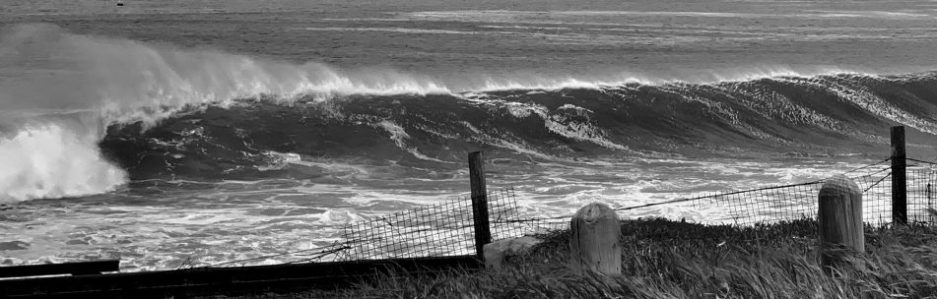
Recently, Kim Feldmann of Surf Simply interviewed with me about some of the main points of my research on surfing ans politics in South Africa during the early months of the COVID pandemic.

This is from the introduction of the interview, titled “Unridden”:

‘”In the midst of the COVID-19 pandemic and the hard lockdown in South Africa in the first half of 2020, I took an interest in how surfing communities along the coast from Cape Town to Durban were responding to the “new normal” of the beach ban,” says Dr Glen Thompson, a Research Fellow in the History Department at Stellenbosch University, South Africa, author of a chapter entitled Dreaming of “Level Free”: Lockdown and the Cultural Politics of Surfing during the COVID-19 Pandemic in South Africa in the book Sport and Physical Culture in Global Pandemic Times: COVID Assemblages, edited by David Andrews, Holly Thorpe, Joshua Newman. In it, Thompson delves into the influence of surfing’s non-conformist values and notions of freedom on the collective mindset of South African surfers amidst the pandemic, and how the May 5 beach protest against ocean-based activities shaped perceptions of surfer entitlement entwined with the history of whiteness and middle-class privilege in South African surfing.’

Read the full Surf Simply interview here.
Otelo Burning, freedom and surfing

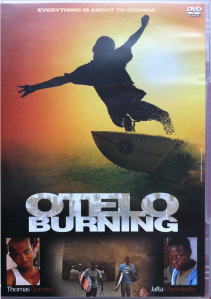
In August 2013, cjac20.v026.i03.coverMeg Samuelson and I collaborated on an interdisciplinary project that considered the contemporary politics, shifting poetics and invoked pasts in the film Otelo Burning (2011), an isiZulu language film that uses surfing to pose questions about personal and political freedom during the demise of apartheid (1988-1990).

An outcome of the project was the publication of several essays and an interview with Sara Blecher (producer, director) and Sihle Xaba (actor, surfer) in the Contemporary Conversations section of the Journal of African Cultural Studies, Volume 26, Number 3, September 2014.

Contemporary Conversations: Otelo Burning 

Meg Samuelson and Glen Thompson, “Introduction.” (Free Access to the article, which includes audio-visual supplementary material relating to the film and its reception).

Meg Samuelson, “Re-telling freedom in Otelo Burning: the beach, surf noir, and Bildung at the Lamontville pool.” (Free Access to the article).

Glen Thompson, “Otelo Burning and Zulu surfing histories.” (Open Access to the article).

Bhekizizwe Peterson, “Otelo Burning (dir. Sara Blecher, 2011).

Litheko Modisane, “Otelo Burning: On the turbulence of freedom.”

David Johnson, “Beyond tragedy: Otelo Burning and the limits of post-apartheid nationalism.”

Meg Samuelson and Glen Thompson, “Interview with Sara Blecher and Sihle Xaba: the making and meanings of Otelo Burning.”

OB dvd-cover